If you’ve ever stepped into a professional recording studio, you’ve probably noticed how crisp vocals sound there compared to a home recording space, even if you use the same microphone and audio interface. When people ask me, “Can acoustic panels be used in a recording studio?” I don’t just give a simple yes – I walk them through why they’re not just an accessory, but a non-negotiable part of turning a chaotic echoey room into a space where every note, every word, and every sound feels intentional and professional. As someone who’s spent 8 years as an acoustic panel supplier, working with independent artists, home studio creators, and even small commercial studios, I’ve seen firsthand how the right panels can turn a garage or a spare bedroom into a space that competes with top-tier recording facilities. Let me break this down, not just with sales jargon, but with real-world examples and the science that makes acoustic panels work. Acoustic Panel
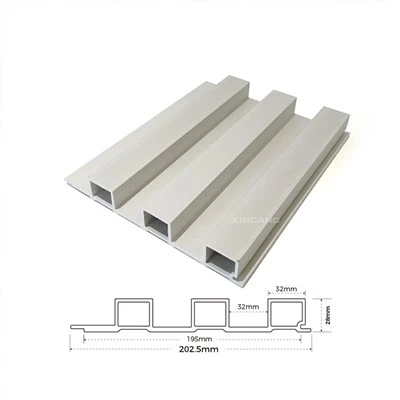
First, I need to clear up a common misconception: not all acoustic panels are made for recording studios, and not all studio spaces need the same type of panel. A lot of new studio owners come to me with a stack of generic foam panels they bought online, thinking they’ll fix their echo problem – only to realize they’re dealing with muddy low-end rumble or dead, lifeless sound instead. That’s because acoustic panels are designed to target specific sound frequencies, and understanding that is key to using them effectively. Sound travels in waves, and different frequencies have different wavelengths: low frequencies (bass) are long, slow waves that can travel across a room and bounce multiple times, while high frequencies (vocals, cymbals, acoustic guitar strings) are short, fast waves that bounce close to their source. Generic foam panels, often called “egg crate” foam, are thin and only absorb high frequencies, leaving low frequencies to rattle around and muffle everything. Professional-grade acoustic panels, the kind we supply, are thick (usually 2 inches or more, depending on the frequency target) and filled with dense, porous materials like mineral wool or fiberglass – materials that trap sound waves as they pass through, converting them into tiny amounts of heat, which eliminates echo and resonance.
So, let’s get specific about where acoustic panels belong in a recording studio. The most critical spots are the first reflection points – the areas on the walls to the left and right of your microphone or instrument (say, a guitar amp or a drum kit) that sound waves bounce off before reaching your ear or your studio monitor. If you’ve ever sat in a room and heard a voice sound like it’s echoing even when you’re not talking loudly, that’s the first reflection. Hanging panels on these points cuts down on that unwanted echo, making the sound coming from your monitors clear and direct. For a vocal booth, which is usually a small enclosed space, we recommend panels on the back wall (the wall behind the vocalist) and the side walls to prevent the sound from bouncing back and creating a “boomy” vocal track. A lot of vocalists complain that their voice sounds “chesty” or muffled when they record at home – 9 times out of 10, it’s because their room’s back wall is reflecting bass frequencies from their voice, which gets mixed into the track and makes it difficult to edit later.
Then there’s low-frequency management, which is where many new studio owners go wrong. Bass traps, a type of acoustic panel designed specifically for low frequencies, are usually placed in the corners of a room because low frequencies accumulate in these tight, enclosed spaces. A drum kit’s kick drum, for example, produces deep bass waves that will vibrate the walls of a small home studio, making the entire track sound muddy. We supply bass traps that are 4 inches thick, filled with high-density mineral wool, and shaped to fit snugly into corners – they absorb that excess low-end energy without deadening the overall sound. I once worked with a folk artist who was recording in his 12×16 spare bedroom; he had a kick drum track that sounded like it was coming from a barrel even though he was using a high-quality mic. We sent him a set of corner bass traps and a few thick panels for his first reflection points, and when he sent me the new track, the difference was night and day – the kick drum had a tight, defined thud, the vocals were crisp, and he didn’t have to spend hours editing out the muddy rumble he hated.
Another thing to consider is studio monitors. Even if you record in a small space, you need to hear your mix accurately, otherwise you’ll end up with tracks that sound great in your studio but muffled or too bright on other speakers. Acoustic panels help create a balanced sound field by reducing unwanted reflections that interfere with the monitor’s output. If you have bare walls and a hard floor, the sound from your left monitor will bounce off the back wall and mix with the sound from your right monitor, making it hard to tell where a sound is coming from. That’s called “phase cancellation,” and it’s a headache for mixing engineers. Panels fix that by absorbing those stray sound waves, so you hear exactly what the monitor is producing, not what the room is adding. I’ve had producers come to us after trying to mix in their untreated home studio, complaining that their mixes sounded too bass-heavy on phone speakers but too treble-heavy in their car. After adding our panels to their first reflection points and side walls, they told me their mixes translated across every speaker, which is the whole point of good recording and mixing.
Now, I know what some people are thinking: “Acoustic panels are expensive – can’t I just use blankets or moving pads?” Let me address that. A thick, dense moving blanket might work for high frequencies, but it’s not designed for consistent, long-term use in a recording studio. Moving blankets are lightweight, so they absorb less low-frequency energy, and they stretch over time, which changes their acoustic properties. We tested a set of our 2-inch mineral wool panels against three thick moving blankets in a 10×12 home studio, and the moving blankets only reduced echo by about 20%, while our panels reduced it by 75%. For a project studio where you’re recording regularly, that difference is huge – you don’t want to re-record tracks because your untreated space is ruining the sound. That said, for a temporary setup (like a vocal booth for a single session), heavy blankets can be a budget option, but for any studio that you plan to use long-term, investing in proper acoustic panels is worth every penny.
There’s also a common myth that acoustic panels will make a studio sound “dead” – like a room with no life. The truth is that good acoustic panels balance absorption and diffusion. Diffusers are another product used in studios, but they’re for larger spaces where you want to add warmth without eliminating all sound. Acoustic panels are for targeted absorption of unwanted echo and resonance, not for turning a room into a box where no sound feels natural. A well-treated studio will have a “live” sound when you speak or play an instrument, but it will have clear, direct sound when you record or mix. I’ve seen studios with only 4-6 panels that sound better than studios with 20 generic foam panels, because they’re placed in the right spots and target the right frequencies. It’s not about how many panels you have – it’s about where you put them.
Let’s talk about real studio examples, because theory is great, but real results matter. A few months ago, I worked with a small independent label that had a tiny studio in a converted apartment in Brooklyn. Their main room was 11×14, with drywall walls and hardwood floors, and when they recorded hip-hop tracks, the vocals sounded boomy and the 808 bass from the beats overwhelmed the vocals. They tried moving their monitors, rearranging the room, even buying a new microphone, but nothing fixed it. We sent them 2 first reflection panels for the side walls, 2 bass traps for the back two corners, and a small panel for the front wall behind the monitor. When they installed them, they sent me a test track of a rapper’s vocal: the boom was gone, the vocal was crisp, and the 808s had a tight, defined thud that sat well under the vocals. The label’s producer told me that they’d cut their mixing time in half, because they no longer had to edit out the excess low-end that their untreated room was adding. That’s the kind of result acoustic panels deliver.
Another example is a home studio run by a classical guitarist in Austin, Texas. He was recording solo guitar, and his tracks had a harsh, ringing echo that made the classical pieces sound unprofessional. He had a small space, so he didn’t want to fill it with big panels, but he was tired of re-recording every song multiple times. We recommended 4 narrow panels for the side walls, placed at ear level when he plays, and 2 small bass traps for the front corners. He installed them, and when he sent me his new album, he said the difference was amazing – the guitar had a warm, full sound without the harsh echo, and his audiences commented on how clear and professional the recordings sounded. That’s the power of properly placed acoustic panels in a small, personal recording space.
Now, let’s get into the science behind why this works, for anyone who wants to go deeper. Porous acoustic panels work on the principle of sound absorption: when a sound wave hits the panel, it travels into the porous material (mineral wool, fiberglass, or even dense cotton) and bounces around in the tiny gaps between fibers. This friction converts the sound wave’s kinetic energy into small amounts of heat energy, which is dissipated into the air. The density and thickness of the material determine which frequencies it absorbs: higher density materials absorb lower frequencies, thicker panels absorb lower frequencies better. For example, a 2-inch panel works best for mid and high frequencies (200 Hz and above), while a 4-inch bass trap is designed to absorb lower frequencies (below 200 Hz). That’s why it’s important to choose panels that match your studio’s size and the sounds you’re recording – a small vocal booth needs thinner, targeted panels, while a larger studio for drums and bands needs thicker bass traps and more panels on hard surfaces.
I also want to mention installation, because even the best panels won’t work if you hang them wrong. Generic foam panels can be stuck to walls with adhesive, but professional acoustic panels need to be mounted with an air gap between the panel and the wall, or hung on a frame, to improve low-frequency absorption. That air gap acts like an extra layer of material, allowing low-frequency sound waves to pass through the gap and be absorbed by the panel. We always include installation guides with our panels, and we offer free consultations for studio owners who aren’t sure where to place their panels. A lot of people think they can just hang panels anywhere, but the first reflection points are always the most important, followed by the corners for bass.
At the end of the day, the goal of a recording studio is to capture sound as accurately as possible, so that what you record is what you hear, and what you mix translates across all listening devices. Acoustic panels are a critical part of that process, because they eliminate the unwanted sound that gets added by the room itself. Whether you’re a solo artist with a small home studio, a producer working out of a garage, or a small label with a commercial studio, acoustic panels can turn your space from a place where it’s hard to get good sound into a space where you can create professional, high-quality recordings.

If you’re ready to take your studio’s sound to the next level, we can help you choose the right panels, bass traps, and diffusers for your space, based on the size of your room, the instruments you record, and your budget. We work with artists at every level, from beginners just starting out to established producers, and we offer personalized consultations to make sure you get exactly what you need. Don’t let an untreated room hold back your work – contact our team today to discuss your acoustic needs and start building a studio that sounds as good as your music.
PVC Marble Sheet References
- Beranek, L. L. (1986). Acoustics: Sound Fields and Transducers. Academic Press.
- Cox, T. J., & D’Antonio, P. (2004). Acoustic absorbers and diffusers: Theory, design, and practice. CRC Press.
- Howard, D. M., & Angus, J. S. (2013). Acoustics and psychoacoustics (2nd ed.). Focal Press.
- Everest, F. A. (2016). The master handbook of acoustics (6th ed.). McGraw-Hill.
- Long, M. (2014). Architectural acoustics (3rd ed.). Academic Press.
Linyi Xingang International Trade Co., Ltd.
We are one of the most professional acoustic panel manufacturers and suppliers in China. With abundant experience, we warmly welcome you to buy high quality acoustic panel made in China here from our factory. If you have any enquiry about quotation, please feel free to email us.
Address: 13th Floor, Building B, Central Times Square, Beicheng New District, Lanshan District, Linyi City, Shandong Province
E-mail: vincent@cnxingang.cn
WebSite: https://www.xgdeco.com/
