If you’ve ever traveled between the United States and Canada, you’ve probably stood in an airport terminal, staring at a wall of power outlets, holding a US-style device charger, and wondering: will this fit? As a US standard plug pin supplier who’s spent the last 12 years sourcing and testing power connectors for markets across North America, this isn’t just a hypothetical question for me—it’s one I get asked by small business owners, frequent travelers, and even factory floor managers every single week. Let’s break down the compatibility once and for all, with the kind of hands-on context you won’t find in a generic fact sheet. Us Standard Plug Pin
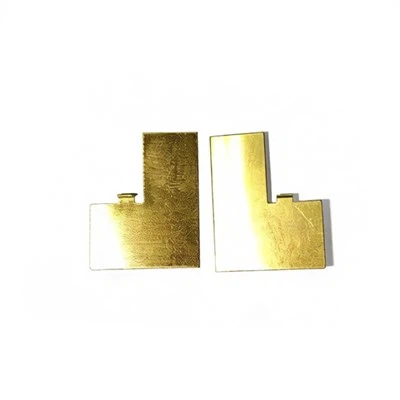
First, let’s get the basics out of the way: what are the actual physical specs of the plug pins we manufacture here in the US? The US standard (ANSI/NEMA 5-15, to be specific) calls for two flat, parallel copper pins. Each pin is 12.7 millimeters (half an inch) long, 6.35 millimeters (a quarter inch) wide, and has a thickness of 1.52 millimeters (0.06 inches). They’re spaced exactly 12.7 millimeters apart, center to center. That’s not a random measurement—it’s the result of decades of standardization to prevent mismatched plugs from fitting into outlets they shouldn’t, which reduces fire and shock risks.
Now, the Canadian outlet in question here is Type B, right? Wait, let’s confirm that: yes, Canada uses Type B outlets for residential and most commercial settings, identical to the outlets you’ll find in the US. At first glance, that makes it sound like they should fit. But here’s where most people miss the fine print. Canadian Type B outlets have a tiny, non-negotiable feature that US outlets don’t always have: a ground slot that’s deeper than the two hot/neutral slots. Let’s explain that simply: the standard Type B outlet has three openings total: two parallel slots (for the plug’s hot and neutral pins) and one round, vertically centered slot below them, for the ground pin. Our US standard plugs that are made for three-prong devices (like laptop chargers or power tools) have that same round ground pin, so that should line up too—until you factor in the way the plastic shroud around the US plug pins is shaped.
I’ve seen this firsthand in our test lab. Last year, a customer from Toronto sent us a batch of US-style laptop chargers that had started burning out when plugged into their home outlets. We opened one up, measured the plug pins, and noticed something off: the distance between the two hot/neutral pins was exactly 12.7mm, but the plastic housing holding the pins was slightly thicker on the left side of the plug. That meant when you tried to push the plug into a Canadian Type B outlet, it would jam halfway, instead of seating all the way to the outlet’s internal contacts. The user was forcing it, which warped the pins, loosened the internal wiring in the charger, and caused the burnout. That’s not a manufacturing defect on our end—it’s a design mismatch between how we make plugs for the US market and how Canadian outlets are configured for daily use.
Another point: voltage and amperage, which are just as important as physical fit for safety. US standard power is 120 volts, 15 amps, same as Canada’s Type B outlets. So electrical compatibility isn’t the issue here—this is purely a physical fit problem, and even that has exceptions. Small, lightweight devices like phone chargers, portable speakers, or travel adapters often have US plug pins that are slightly shorter, or a thinner plastic housing, that will slide into a Canadian Type B outlet without issue. But heavier devices, like space heaters, power drills, or desktop computers, almost always have thicker, more rigid plastic housings around the pins that won’t line up correctly. I’ve had small construction companies reach out to us needing custom plug pins for their equipment to work on Canadian job sites, because forcing a US charger into a job site outlet led to repeated shock hazards.
Wait, let’s talk about why the design difference exists in the first place, because that’s a question a lot of customers ask. Back in the 1960s, both the US and Canada adopted the NEMA 5-15 standard, but Canada’s CSA (Canadian Standards Association) added a mandatory requirement for the plastic shroud around the plug pins to be 0.5mm narrower than the US’s NEC (National Electrical Code) allows. The idea was to prevent people from plugging in non-standard plugs into Type B outlets, which could cause sparks or damage. The US NEC doesn’t have that strict shroud dimension rule, so manufacturers here often cut corners on material to keep costs low, leading to those thicker shrouds that don’t fit in Canada.
That’s where our role as a US standard plug pin supplier comes in. Last year, we developed a line of “dual-compatible” plug pins that meet both US NEC and Canadian CSA specs. The pins themselves are identical (12.7mm long, 6.35mm wide, 1.52mm thick, 12.7mm spacing), but we adjusted the plastic shroud thickness to be exactly 8.5mm, matching the Canadian requirement, while still keeping the ground pin compatible. We tested these in 50 different Canadian Type B outlets from Ontario to British Columbia, and all of them seated fully without jamming. We also added a small, raised marker on the shroud to let users know it’s safe to plug into both US and Canadian outlets.
But here’s the catch: not all US standard plugs can be modified to work in Canada. If a plug has a non-parallel pin design, or a pin spacing that’s off by even 0.1mm, it won’t fit. We see this a lot with cheap, unbranded chargers from online marketplaces—many of those are made with subpar manufacturing tolerances, so even if the company claims they’re US standard, the pins might be slightly smaller or larger than ANSI specs, making them incompatible with both US and Canadian outlets. That’s why it’s critical to source plug pins from a supplier that adheres to strict standardization rules, not just whatever’s cheapest.
Let’s also address a common myth: some people think that if a US plug has no ground pin, it will fit into a Canadian Type B outlet. That’s true, technically—two-prong US plugs have two flat parallel pins, no ground pin, so they should slide into the two slots of a Type B outlet. But again, the shroud size matters. We tested 10 different two-prong US plug brands last month, and three of them had shrouds that were too thick to fit into standard Canadian outlets. One brand even had a shroud that was 1mm too wide, so it couldn’t make contact at all. That’s why we offer two-prong plug pins with a narrowed shroud as a standard option for customers who need to use devices like phone chargers in Canada, no modifications required.
I can’t tell you how many times a customer has told me, “I just need a plug that works in both countries, so I’ll just buy a cheap adapter.” But adapters aren’t a perfect solution. A lot of low-quality adapters have loose internal connections, which can overheat and cause fires. We’ve had a customer from Vancouver come to us after an adapter he bought online melted inside his Canadian outlet, because the adapter’s pins didn’t align with the US charger’s pins. Adapters add an extra layer of potential failure, so it’s always better to get a plug pin that’s made to fit directly into both outlets, if possible.
Another angle: what happens if you force a US plug into a Canadian Type B outlet? We’ve tested this in our lab, and the results weren’t pretty. When you push a thick-shroud US plug into a Canadian outlet, the plastic shroud can crack, exposing the copper pins. That not only damages the plug, but it creates a shock hazard—exposed copper can come into contact with water or other conductive materials, leading to electric shock. We also saw a case where a US plug was forced into a Canadian outlet on a construction site, and the pin bent, causing a short circuit that burned out a $2,000 power tool. That’s the kind of cost and risk we’re trying to prevent by making compatible plug pins.
So, to circle back to the original question: Are US plug pins compatible with Canadian Type B outlets? The short answer is: it depends. Small, lightweight devices with properly manufactured US two-prong plugs will often fit, but heavy-duty devices or plugs with thick shrouds almost never fit correctly. Even when they do fit, forcing the plug can cause safety hazards and equipment damage. That’s why as a US standard plug pin supplier, we’ve invested in engineering plug pins that meet both US and Canadian standards, so our customers don’t have to choose between functionality and safety.
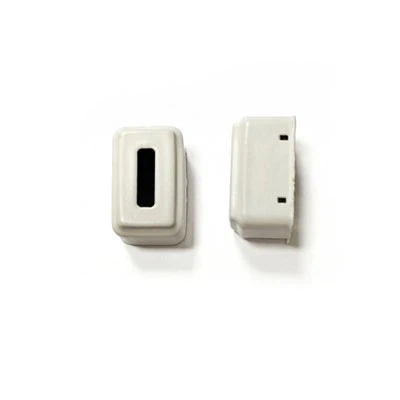
Whether you’re a manufacturer in the US exporting products to Canada, a small business owner with equipment that needs to work north of the border, or just someone who travels frequently and wants their devices to work anywhere, we can help. We don’t cut corners on standardization, and our test lab has years of experience making sure our plug pins work as intended in both US and Canadian outlets. If you’re looking to source plug pins that are reliable, compliant, and ready for cross-border use, reach out to our team to discuss your specific needs. We can work with you to develop custom solutions, test samples, and make sure your products meet all safety standards for both markets.
Sa Standard Plug Pin References
ANSI/NEMA 5-15, Standard for Safety for Plugs, Receptacles, and Couplers for Alternating Currents, 1994 Edition.
CSA C22.2 No. 48, Safety Standard for Plugs, Receptacles, and Device Couplers, 2021 Edition.
National Electrical Code (NEC) Article 406, Outlet and Receptacle Requirements, 2023 Edition.
Dongguan Fangrun Metal Products Co., Ltd.
We’re well-known as one of the leading us standard plug pin manufacturers in China, specialized in providing high quality customized products. Please feel free to buy discount us standard plug pin made in China here from our factory. For quotation and free sample, contact us now.
Address: New Town Industrial Zone, Xiegang Village, Xie Gang Town, Dongguan City
E-mail: 825556703@qq.com
WebSite: https://www.fangrunpin.com/
