Hey there, AHU
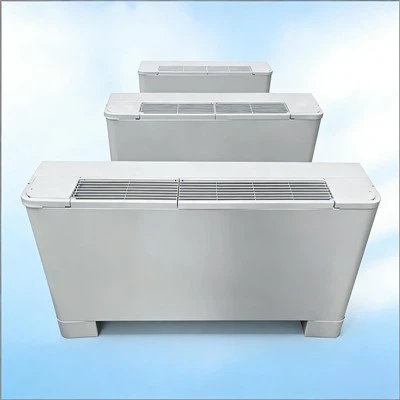
If you’ve ever walked into a high-rise apartment building, a luxury condo, or even a modern suburban home with perfectly consistent temperature levels everywhere—no stuffy hallways or freezing bedrooms in winter—you’ve probably benefited from an AHU without even realizing it. As an AHU supplier, I get asked this question all the time: Can Air Handling Units (AHUs) really work in residential spaces? For the longest time, I thought AHUs were just for offices, hospitals, and big commercial buildings. But over the last few years, I’ve worked with dozens of residential builders and homeowners who switched from window ACs and mini-splits to AHUs, and the results? Pretty game-changing. Let’s break this down like we’re chatting over coffee, no stuffy engineering jargon.
First, let’s get clear on what an AHU actually does, because I see so many people mix it up with other HVAC systems. AHU stands for Air Handling Unit, right? It’s a self-contained box (usually installed in an attic, basement, or utility closet) that brings in outside air, filters it, heats or cools it, and then pushes that conditioned air through your home’s ductwork. Unlike window units that sit in a wall and cool only one room, or mini-splits that have outdoor compressors paired with indoor heads, an AHU circulates air through the entire house. It’s the core part of central HVAC systems, but up until recently, it was seen as too bulky, too expensive, and too “commercial” for homes.
Wait, bulky? Yeah, old-school commercial AHUs are big, but residential AHUs? We’ve engineered smaller, slimmer models over the last 10 years that fit right in a standard residential attic. I recently sold a 2-ton AHU to a homeowner in Portland who had a 1,800 sq ft ranch. His old system was a noisy mini-split that couldn’t keep his master bedroom cool in summer and his basement warm in winter. The AHU? Quiet, fits in his attic (we cut a small access panel so his HVAC tech could get to it easily), and zoned—so he can set different temps for the first floor vs. the second floor. He texted me last month saying his energy bill dropped 22% and he hasn’t had to open a window for fresh air all year. That’s the big win people miss: residential AHUs bring in filtered outdoor air, which mini-splits and window units don’t do. Those recirculate the same stale air, which can lead to dust buildup, allergy issues, and even stuffy rooms. If you have kids with asthma or seasonal allergies? That fresh air filtration makes a huge difference.
But let’s talk about the pushback, because I hear it all the time. “AHUs are too expensive for a single-family home.” Okay, let’s be real: upfront cost is higher than a basic window AC, but when you look at long-term savings? Let’s do the math. A standard 3-ton residential AHU with a SEER 24 rating (that’s super efficient, by the way) costs around $4,500-$6,000 installed. A matching furnace (if you need heating) adds another $3,000-$5,000, but wait—most AHUs work with your existing furnace, so if you’re updating your HVAC anyway, you’re not starting from zero. Compare that to 5 window units, which run about $150 each total, but their energy use is way higher. The EPA says central HVAC systems (which include AHUs) use 30% less energy than multiple window units. For a homeowner in a moderate climate, that’s $800-$1,200 a year in savings, depending on their usage. So even with upfront costs, you’re breaking even in 5-7 years, and then you’re saving money every year after that. Also, no more lugging heavy window units up and down stairs in spring and fall—huge plus for people with bad backs or small kids.
Another complaint: “AHUs are complicated to install and maintain.” Yeah, if you get a cheap, off-the-shelf commercial AHU crammed into a residential space, you’re going to have problems. But residential AHUs are built for home use, and most HVAC techs who work on central systems know how to install them. Maintenance is simple: change the air filter every 1-3 months (just like you would for a furnace or mini-split), and have a tech check the unit once a year before heating or cooling season. I remember a customer in Denver who tried to skip changing his filter for 6 months—his AHU worked a little harder, but it didn’t break down, which is more than I can say for his old mini-split that died after 2 years because he forgot to clean its air filter. The key here is working with an AHU supplier that offers residential-specific units, not just scaling down a commercial model. We design our residential AHUs with compact, quiet blowers (those are the parts that move air) so they don’t make that loud commercial humming noise you hear in office buildings.
Wait, what about multi-family homes? That’s where AHUs have been a staple, but now residential owners in single-family homes are catching on. I recently worked with a developer building a 12-unit townhome complex in Austin. Every unit got a 2.5-ton zoned AHU. The developer told me that even though the upfront cost per unit was $1,000 higher than mini-splits, the rental applications spiked because prospective tenants saw “central air with fresh air ventilation” as a luxury. They were right—renters will pay 10-15% more for a home with consistent temperature and good air quality. That’s a big selling point for both developers and homeowners looking to flip or rent their properties.
Let’s get into the science part, because I know some of you are thinking, “Is this actually a good choice, or is my supplier just trying to sell me stuff?” AHUs work on a basic principle: they condition air, which means adjusting its temperature, humidity, and purity. For residential use, that means they can dehumidify air in summer (super important for places like Florida or Louisiana where humidity makes 75 degrees feel like 85) and humidify it in winter (dry air irritates sinuses and dries out wood floors). Window ACs actually make humidity worse because they cool air quickly without removing moisture properly. AHU units have built-in humidity controls, so your home feels comfortable at a lower temperature in summer, which saves energy. That’s not just marketing—ASHRAE (the American Society of Heating, Refrigerating and Air-Conditioning Engineers, for the uninitiated) recommends that residential HVAC systems include outdoor air ventilation, and AHUs are one of the most efficient ways to do that.
I will be honest, though—AHUs aren’t for every home. If you’re living in a tiny 500 sq ft studio apartment, a window unit is probably cheaper and easier. Or if you’re renting a home and can’t modify ductwork, an AHU might not work because it needs a duct system to push air through. But if you own a home with existing ductwork, or you’re building a new home with ductwork planned, an AHU is worth a serious look. Also, if you live in an area with extreme temperatures—like 100 degree summers or below 0 degree winters—AHUs are actually more reliable than some mini-splits in those conditions. I had a customer in Minneapolis whose mini-split stopped working in a -10 degree snap last year; his AHU kept his home at 68 degrees without missing a beat.
Here’s a trend I’m seeing that’s making AHUs even more popular for residential use: smart AHUs. Modern models connect to your home Wi-Fi, so you can adjust the temperature from your phone, set schedules, and even get alerts when your filter needs changing. Some models also have air quality sensors that adjust ventilation based on how many people are in the home or the level of pollen outside. Last month, a mom in Seattle told me her kid has severe pollen allergies; her smart AHU automatically increased filtration when pollen counts spiked, and within a week, her son’s allergy symptoms went way down. That’s a level of control you just can’t get with a basic window AC.
Now, let’s talk about common myths that still float around. Myth #1: “AHUs use too much energy.” Modern residential AHUs have SEER ratings up to 26, which is way higher than most window units (which max out around SEER 20) and even many mini-splits. The Department of Energy says a SEER 24 system can save up to 30% on energy costs compared to a SEER 14 system, which is the minimum required in most states. Myth #2: “AHUs are too noisy.” Old commercial AHUs were loud, but residential models use insulated cabinets and variable-speed blowers that run quietly—you can barely hear them when they’re working, even if they’re in your attic. I’ve had customers tell me they forget their AHU is running because it’s so quiet, unlike their old mini-split that rattled at night.
As an AHU supplier, I’m not here to convince everyone to switch. I’ve seen what works for different homes, and I know AHUs aren’t the right fit for every rental or tiny space. But for homeowners who want consistent comfort, better air quality, and long-term energy savings, they’re a no-brainer. I recently had a new customer, a retiree in Phoenix who’s lived in the same home for 30 years. He’d gone through 7 window units in that time, each dying after 3-4 years. We installed a 3-ton AHU last spring, and he’s already saved $400 on his energy bill. He told me, “I wish I’d done this 20 years ago.” That’s the reaction I love to get.
So, if you’re someone who’s tired of uneven temperatures in your home, allergy flare-ups from stale air, or paying too much for multiple HVAC units, it’s time to look at residential AHUs. They’re not just for skyscrapers and hospitals anymore—they’re built for regular homes, and they’re changing how people think about residential HVAC.
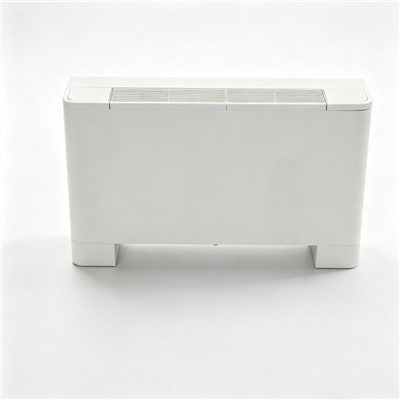
If you want to learn more about what a residential AHU would look like for your home, or you’re ready to chat about pricing and installation, reach out to us to discuss your project. We can help you pick the right size, model, and features that fit your home and budget, no pressure—just straight answers from someone who’s been in the AHU game for years.
AHU References:
- U.S. Department of Energy. (2024). Central Air Conditioning Systems for Residential Use.
- American Society of Heating, Refrigerating and Air-Conditioning Engineers (ASHRAE). (2023). Ventilation Standards for Residential Buildings.
- Energy Star. (2024). Energy Efficiency of Residential HVAC Systems.
- Air Conditioning Contractors of America (ACCA). (2022). Residential Air Handling Unit Installation Guidelines.
Shandong Kasuo Air Conditioning Equipment Co., Ltd.
Shandong Kasuo Air Conditioning Equipment Co., Ltd. is one of the most professional ahu manufacturers and suppliers in China, featured by quality products and good price. Please rest assured to wholesale high-grade ahu for sale here from our factory. We also accept customized orders.
Address: Luquantun Industrial Park, Wucheng District, Dezhou City, Shandong Province
E-mail: ksair@kasuoac.com
WebSite: https://www.kasuoac.com/
