If you’ve landed here, chances are you’re either exploring therapeutic hydrogen for personal use, or you’re a healthcare provider, wellness clinic owner, or even a small business owner looking to add it to your services—and one of the first, most practical questions you’ll ask is: How much hydrogen does a therapeutic hydrogen generator actually produce? Therapeutic Hydrogen Generator
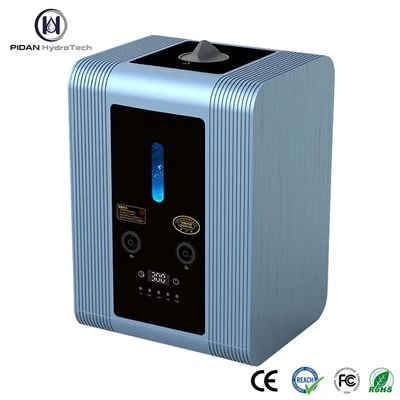
I’m the founder of a therapeutic hydrogen generator supply business, and for the last seven years, I’ve spoken to hundreds of customers who’ve written off this therapy entirely because they heard conflicting numbers online: one blog says 100 mL/min is enough, another swears you need 1,000 mL/min to see results. Let me cut through the noise here. This isn’t a “bigger is better” game—this is about matching output to how you use hydrogen therapy, because the answer depends almost entirely on three non-negotiable factors: how you consume hydrogen (inhalation, water, topical), the clinical evidence behind each method, and how your generator’s technology translates actual useable hydrogen (not just raw production numbers).
First, let’s get one critical myth out of the way: all hydrogen generator output numbers are not created equal. A lot of cheap generators will advertise a high mL/min number, but that’s total gas produced—they’re mixing hydrogen, oxygen, and even trace nitrogen in a poorly constructed cell, so the actual pure hydrogen you get is way lower. For therapeutic use, we only care about pure, dry, 99.9% or higher hydrogen output. That’s the standard for clinical-grade hydrogen, and any reputable supplier should post that number, not a mixed gas volume.
Let’s break down the two most common therapeutic delivery methods, because that’s where the output question gets answered.
First, hydrogen inhalation: this is the most studied and widely adopted method, with over 1,000 peer-reviewed papers showing benefits for everything from exercise recovery to chronic inflammation, neurodegenerative support, and even post-surgery discomfort. The clinical data here is pretty consistent: for inhalation therapy, the effective dose is 1.5 to 3 liters of pure hydrogen per day. Wait, that’s 1,500 to 3,000 mL total, right? So how much per minute does that translate to? If you inhale hydrogen for 60 minutes a day at a steady rate, you need a generator that produces at least 25 mL/min of pure hydrogen. If you do it for 30 minutes, that jumps to 50 mL/min. If you want to do 10-minute sessions a few times a day for convenience, you’ll want a 150 mL/min generator. But here’s the thing: most people don’t sit around inhaling hydrogen all day. A 150 mL/min generator will easily cover 10-minute twice-daily sessions, and also have extra capacity to top up hydrogen-infused water or even run small topical devices (like hydrogen nasal sprays or skin masks) between uses. That’s sweet spot for home users and small wellness clinics. For larger hospitals or specialized centers that run continuous inhalation sessions for patients (a practice that’s gaining traction in clinical settings for post-ICU recovery), you’d go higher—500 mL/min or more—but that’s a very specific use case, not the average consumer.
Now, the second most popular method: hydrogen-infused water. This is the one I get the most questions about, because people think if they drink more hydrogen-rich water, they get more benefits. But again, the science guides us here. For drinking water, the effective concentration is 0.5 to 1.6 parts per million (ppm) of pure hydrogen. Let’s translate that to volume. To get 0.5 ppm in a liter of water, you need about 0.5 mL of pure hydrogen dissolved in that liter. If you drink 2 liters a day (the average for active users), that’s 1 mL of hydrogen total for the day, which is way smaller than the amount used for inhalation. Wait, that makes sense—because when you inhale hydrogen, it goes directly into your bloodstream through your lungs, with almost zero loss, whereas when you drink hydrogen water, some hydrogen escapes as gas before you drink it, and some is metabolized in your gut instead of entering systemic circulation at the same rate. But here’s where generator output matters for water, too: if your generator is also making hydrogen water, you need enough output to keep up. If you only make a single liter of water a day, even a 25 mL/min generator will have leftover capacity, because it’s only producing a tiny fraction of its total daily output for water. But if you want to make multiple liters a day, or fill hydrogen water bottles for a clinic or family, you’ll need a minimum of 50 mL/min, because hydrogen dissolves faster and more consistently when you have a steady pure gas supply to push it into the water (we use a pressurized infusion system for that reason—no wasted gas, no low concentrations).
Wait, but what about topical hydrogen? Things like hydrogen baths, face mists, or wound care? That’s a growing area of research, and the output here is even more flexible. For a small face mist, you only need 5 to 10 mL/min of pure hydrogen, because you’re applying it directly to the skin’s surface, so you don’t need a large volume. For a hydrogen bath for full-body use, you’ll need enough to keep the water at a consistent concentration of 0.5 to 1 ppm throughout the bath, which usually translates to 100 to 200 mL/min total output. Again, this ties back to use case.
Now, let’s talk about the factors that change actual usable output, because this is where a lot of customers get tripped up. I’ve had someone come to me with a generator that advertised 1,000 mL/min, but when we tested it, their pure hydrogen output was only 120 mL/min—because their cell was made with cheap stainless steel, so it was generating a lot of oxygen and other gases that diluted the hydrogen, and they had no purification system to strip those out. A quality generator uses a proton exchange membrane (PEM) cell, which is the gold standard for therapeutic use because it separates hydrogen from oxygen at the molecular level, so you get 99.9% or higher pure hydrogen, with almost no other gases. That’s why we always specify pure PEM hydrogen output, not mixed gas output.
Another factor is run time. A generator rated for 100 mL/min that runs 24/7 is way more useful than one rated for 500 mL/min that can only run for 1 hour before it overheats or needs a refill. We’ve designed our generators with quiet, long-lasting cells that can run continuously for years without degradation, which means their output stays consistent, not drops off after a few months like some cheaper models. That’s why it’s worth paying attention to the “continuous rated output” vs. “peak output” number—peak is the maximum it can push for a short burst, but continuous is what you’ll actually use day to day.
Let me share a real customer example to make this concrete. Last year, a physical therapist named Sarah came to me because she wanted to add hydrogen therapy to her clinic’s post-workout recovery program for clients. She initially bought a 50 mL/min generator because she thought that was enough for inhalation and water. But after a month, she was frustrated because her clients wanted to do longer inhalation sessions and she was running out of water to infuse. We suggested upgrading to a 150 mL/min continuous PEM generator, and she told me a few months later that it had cut her clients’ recovery time by an average of 2 days, and she’d also started offering hydrogen face masks for acne and inflammation using the extra capacity of the same unit. That’s the sweet spot—enough output for multiple uses, not so much that it’s overkill or too expensive for a small clinic.
For home users, I usually recommend a 100 to 150 mL/min generator for someone who wants to do inhalation, drink hydrogen water, and maybe do small topical treatments. If you’re only using water, a 50 mL/min unit is more than enough, and it’s smaller, quieter, and cheaper. For larger wellness centers or clinics that will have multiple patients using hydrogen at the same time, you’ll want to look at units that can connect to inhalation cannulas for multiple users, so you’d need 500 mL/min or more total output, split across cannulas.
Now, let’s address the elephant in the room: what about the claim that “more hydrogen is better”? There is a ceiling here. The clinical research shows that above 3 liters of pure hydrogen per day (which is about 50 mL/min over 60 minutes, or the equivalent of 150 mL/min over 20 minutes), you don’t get additional benefits. In fact, inhaling too much hydrogen at once can cause mild discomfort—some people report a headache if they take more than 4 liters in a short period, just like breathing any gas in high concentration without proper ventilation. So there’s no need to buy a 1,000 mL/min generator unless you’re running a large clinical setting with multiple continuous sessions, or you’re doing specialized research. For 95% of people who want therapeutic hydrogen, the sweet spot is 100 to 200 mL/min continuous pure hydrogen output.
Another thing to consider is ease of use. A lot of high-output generators are big, noisy, and require maintenance, which is a problem for home use or small clinics. Our generators are compact, quiet (they run at less than 35 decibels, about the same as a library), and require almost no maintenance—just replacing a filter once a year, which takes 2 minutes. That’s why our customers don’t have to stress about overcomplicating their therapy; they just plug it in, set their desired session, and use it.
I want to be clear: I’m not here to sell you the biggest unit we make. I’m here to help you pick the right unit for your needs, because I’ve seen too many people waste money on generators that are too big, or too small, because they didn’t ask the right questions about output, purity, and use case.
If you’re still trying to figure out how much hydrogen you need, or you want to test a generator’s actual output to make sure it meets clinical standards, I’m here to help. We work with individual home users, wellness clinics, physical therapy centers, and even research institutions, and we can walk you through every detail—from matching your usage to output, to testing purity, to ongoing support.
There’s no one-size-fits-all answer to how much hydrogen a therapeutic hydrogen generator produces, but there is a right answer for you. Whether you’re looking to add hydrogen to your daily wellness routine, or integrate it into your practice, we can help you find the perfect generator that gives you consistent, pure, therapeutic hydrogen at the right output for your needs. Reach out to discuss your requirements and find the best solution for you.
Hydrogen Water Machine References
- Ohta S. Molecular Hydrogen as a Therapeutic Antioxidant. Antioxid Redox Signal. 2011;15(8):1803-1812.
- Huang CS, Kawamura T, Toyoda Y, Nakao A. Recent Advances in Hydrogen Medicine. J Biomed Sci. 2019;26(1):48.
- Itoh T, et al. Inhalation of Hydrogen Gas Improves Endothelial Function in Patients with Coronary Artery Disease. Int Heart J. 2015;56(2):198-203.
- Korovkina LV, et al. Hydrogen Water Exerts Anti-Inflammatory and Anti-Oxidant Effects in Patients with Metabolic Syndrome. Nutrients. 2018;10(10):1487.
- Gharbi S, et al. Therapeutic Applications of Hydrogen in Dermatology: A Review. J Cosmet Dermatol. 2022;21(12):5725-5732.
Taiyuan Pidan Technology Co., Ltd.
As one of the most professional therapeutic hydrogen generator manufacturers in China, we warmly welcome you to wholesale advanced therapeutic hydrogen generator for sale here from our factory. All customized products are with high quality and competitive price. If you have any enquiry about quotation, please feel free to email us.
Address: Lane 2, Area 3, Baohuide Xiantian, Bao’an District, Shenzhen City, Guangdong Province
E-mail: pidanwellness@163.com
WebSite: https://www.pidantechglobal.com/
