Hey there, folks! I’m a supplier of DOF Glass, and I’ve been getting a bunch of questions lately about whether this cool piece of tech can be used for educational purposes. Well, let’s dive right in and explore this topic together. DOF Glass
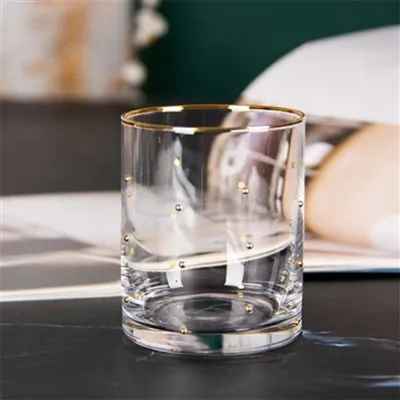
First off, what the heck is DOF Glass? DOF, or Depth of Field, Glass is a unique type of glass that can manipulate the focus and depth perception of what you’re seeing. It’s like having a high – end camera lens built right into a piece of glass. This technology can create some pretty mind – blowing visual effects, and it’s got a lot of potential in the educational realm.
Visual Learning in Science
When it comes to science education, especially in fields like biology, chemistry, and physics, visual aids are super important. DOF Glass can take visual learning to a whole new level.
In biology classes, for example, students often study specimens under a microscope. But sometimes, it’s hard to get a clear sense of the three – dimensional structure of what they’re looking at. With DOF Glass, teachers can project 3D images of cells, tissues, or even entire organisms. The ability to adjust the depth of field allows students to focus on different layers within the specimen. They can check out the outer membranes of a cell, then shift their focus to the internal organelles. It’s like having an X – ray vision for biological samples, and it makes learning so much more engaging.
Chemistry can also benefit big time. When teaching about molecular structures, DOF Glass can display 3D models of molecules. Students can rotate these models in their field of view and adjust the focus to see how different atoms are bonded together. It’s way better than just looking at flat diagrams in a textbook. Understanding the spatial arrangement of atoms is crucial for grasping concepts like chemical reactions and properties, and DOF Glass makes it a whole lot easier.
In physics, the study of light and optics is a key area. DOF Glass itself is based on optical principles, so it’s a perfect teaching tool. Teachers can use it to demonstrate how light rays interact with different materials, how lenses work, and how depth of field is calculated. Students can experiment with different settings on the DOF Glass and observe the changes in the visual field, which helps them understand these complex concepts in a hands – on way.
History and Geography Education
History and geography might not seem like subjects that would benefit from DOF Glass at first glance, but think again.
In history classes, imagine being able to bring historical events to life. Teachers could use DOF Glass to project 3D reconstructions of ancient cities, battlefields, or important historical buildings. Students could walk around these virtual reconstructions, adjusting the focus to examine different parts of the scene. They could zoom in on the details of a medieval castle’s architecture or focus on the expressions of soldiers in a battle reenactment. It gives a whole new perspective on history, making it more tangible and less like just a bunch of dates and facts.
Geography is another area where DOF Glass can shine. When teaching about different landscapes, such as mountains, forests, or deserts, 3D projections through DOF Glass can provide a more immersive experience. Students can feel like they’re actually standing in the Grand Canyon, looking at the rock formations in different layers as they adjust the depth of field. This kind of experience can make it easier for them to understand geographical features, climate patterns, and the relationships between different ecosystems.
Art and Design Education
Art and design students need to have a good eye for detail and a sense of depth. DOF Glass can be a game – changer for them.
In drawing and painting classes, teachers can use DOF Glass to project reference images with adjustable depth of field. This helps students understand how to create the illusion of depth in their own work. They can see how different parts of an image are in focus or out of focus, and learn how to replicate those effects on their canvases.
For students studying graphic design, DOF Glass can be used to view 3D models of their designs. Whether it’s a product design, a website layout in 3D, or a logo in a 3D environment, the ability to adjust the focus allows them to evaluate the visual impact of their work from different perspectives. It can help them identify areas that need improvement and experiment with different design elements.
Challenges in Using DOF Glass for Education
Of course, it’s not all sunshine and rainbows. There are some challenges to using DOF Glass in educational settings.
One of the main issues is cost. DOF Glass technology is still relatively new, and the equipment can be quite pricey. Schools and educational institutions, especially those with limited budgets, might find it hard to afford. But as the technology matures and becomes more widespread, I’m hopeful that the prices will come down.
Another challenge is the learning curve. Teachers and students need to be trained on how to use DOF Glass effectively. It’s not as straightforward as using a regular textbook or a simple projector. There are different settings to understand, and it takes some practice to get the most out of the technology. However, with proper training and support, I believe this can be overcome.
The Future of DOF Glass in Education
Despite the challenges, I’m really optimistic about the future of DOF Glass in education. As the technology improves, we’re going to see even more innovative uses.
For example, we could see DOF Glass integrated with virtual reality (VR) and augmented reality (AR) systems. This would create an even more immersive learning environment, where students can interact with virtual objects and scenarios in a more natural way. They could reach out and manipulate 3D models, and the DOF Glass would adjust the focus based on their movements.
We might also see the development of educational content specifically designed for DOF Glass. There could be a library of 3D educational resources, from science simulations to historical reenactments, that are optimized for the unique capabilities of DOF Glass.
Wrapping It Up and Reaching Out
So, can DOF Glass be used for educational purposes? Absolutely! It has the potential to revolutionize the way we teach and learn in a variety of subjects. From science to art, history to geography, the possibilities are endless.

If you’re an educator, a school administrator, or someone involved in the educational field and you’re interested in exploring how DOF Glass can enhance your teaching and learning experience, I’d love to have a chat with you. We can discuss the different options available, the costs involved, and how we can make this technology work for your specific needs. Just reach out, and let’s start a conversation about bringing the future of education to your classroom.
Handled Glass References
- General knowledge about educational technology and the potential of new visual aids.
- Insights from discussions with educators about the needs and challenges in modern education.
Nexus Household Co., Ltd.
As one of the most experienced dof glass manufacturers and suppliers in China, we also support custom service. Please feel free to wholesale high quality dof glass for sale here from our factory. For free sample, contact us now.
Address: Room0101, 1st Floor, Unit 3, Building 3005, No. 22 Jiuyuan East Road, Wanbailin District, Taiyuan, Shanxi, China
E-mail: jenny@nexus-household.com
WebSite: https://www.nexus-household.com/
