If you’ve ever worked in industries like aluminum alloy production, solar panel manufacturing, or chemical processing, you’ve probably heard the term “metal silicon” thrown around more than a few times. But let’s be real—most folks in the supply chain don’t stop to dive deep into what actually makes metal silicon good, or how a tiny quality blip can throw their whole project off. As someone who’s been running a metal silicon supply business for over 12 years, I’ve seen it all: a client’s entire batch of aluminum extrusions getting rejected because the silicon level was off, a solar panel line shutting down mid-production because of excess iron impurities, even a chemical plant wasting weeks of work because their metal silicon had way too much aluminum content. Today I’m pulling back the curtain on how metal silicon quality actually impacts every single application it goes into—and why that’s the make-or-break detail when you’re picking a supplier. Metal Silicon
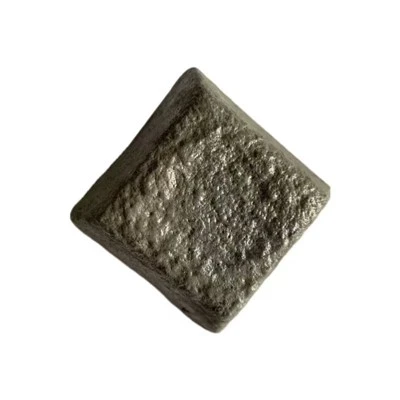
First, let’s keep this simple: metal silicon (often called silicon metal, or Si-metal for short) isn’t your run-of-the-mill silicon found in sand or microchips. It’s an alloy, mined from quartz, processed in super-hot furnaces, with a 97% to 99.9% silicon content (the rest are “impurities” like iron, aluminum, calcium, and sometimes trace elements like phosphorus or sulfur). Those impurities aren’t just random garbage—they’re the whole reason quality dictates where it works, and how well it performs once it’s there.
Let’s start with the biggest application for metal silicon by volume: aluminum alloy production. Over 50% of all metal silicon made every year goes into aluminum, and this is where quality gaps cause the most headaches. If you’re making aluminum for beverage cans, for example, you need metal silicon with a specific silicon target—usually around 12% to 15% in the final aluminum alloy. Wait, no, let me correct that: metal silicon is an additive, so when you mix it with raw aluminum, the silicon content in the final can ends up around that mark. But here’s the thing: if your metal silicon has too much iron (like over 0.5% by weight), that forms big, chunky iron-aluminum intermetallic compounds in the can’s metal structure. Those chunks make the can brittle—they crack during the deep-drawing process you use to turn a flat aluminum sheet into a seamless can. I once had a craft beer client a couple years back who switched to a cheap supplier to save 3 cents per kg. They ended up with 12,000 defective cans that cracked mid-filling, costing them $45,000 in wasted product, lost retail shelf time, and a ruined reputation with a local distributor. They came back to me within a week—turns out we test every batch for iron down to 0.2% max, and that small difference saved them a fortune.
Other aluminum applications are even pickier. If you’re making aluminum for aerospace parts, or automotive engine blocks (those high-performance ones that get hot and need to be super strong), your metal silicon can’t have any excess calcium either. Calcium reacts with silicon to form unwanted compounds that weaken the alloy’s tensile strength. I had an engine component manufacturer reach out to me once after a bad batch of metal silicon left their engine blocks cracking during stress testing. Their old supplier cut corners on processing, so their metal silicon had 0.08% calcium—way over the 0.02% limit we stick to. That one batch cost them a whole production run of engine blocks, not to mention the delay in getting their new line to market. For these high-stakes industries, quality isn’t a “nice to have”—it’s non-negotiable.
Next up is the solar industry, which has blown up in the last 10 years and now uses around 20% of the world’s metal silicon. Wait, actually, solar polysilicon is made from metal silicon—so metal silicon is the raw feedstock for almost every solar panel out there. Let’s get specific here: when metal silicon is refined into solar-grade polysilicon, the starting metal silicon’s purity is everything. The big no-nos here are phosphorus and boron. Even trace amounts (parts per million, yep, that small) of phosphorus make the solar cell absorb too much light instead of converting it to electricity, and boron messes with the cell’s electrical conductivity. If your metal silicon has over 0.3 ppm phosphorus or 0.2 ppm boron, it’s basically unusable for solar-grade polysilicon.
I’ve watched solar manufacturers go from testing every batch of metal silicon once a month to running full impurity panels on every single truckload. A friend who runs a polysilicon refinery in Texas told me last year that a single bad shipment of metal silicon from an unvetted supplier left him with 500 tons of rejected polysilicon—because the phosphorus level was 1.2 ppm, way over the threshold. That’s a $1.2 million loss, just from a bad batch of feedstock. For solar, where efficiency and cost per watt are everything, even a tiny impurity messes with the panel’s performance rating, which directly impacts their ability to get contracts with utilities. If a panel is 1% less efficient than advertised, that’s a big deal for a solar farm that needs to hit specific output numbers to make their project financially work.
Then there’s the chemical and metallurgical chemical industry, which uses the remaining 30% of metal silicon. Here, metal silicon is used to make things like silicones, fumed silica, and specialty chemicals. For silicones used in sealants, cookware coatings, or even medical devices, metal silicon needs to be extra pure, with almost no iron or aluminum. Iron makes silicones turn yellow over time, which is bad for things like clear kitchen sealants or medical tubing that needs to stay transparent and non-reactive. A medical client I worked with a few years back had a silicone product that was supposed to be clear for IV lines, but their metal silicon had excess iron, so the silicone came out pale yellow. They had to recall 20,000 line sets before they even hit hospitals, costing them over $80,000. We adjusted our testing to include ultra-low iron limits (under 0.15%) for their batches, and they’ve been with us ever since.
Wait, but let’s not pretend quality is just about high-purity grades. There are also lower-grade metal silicon used for things like iron foundries, where they use it as an inoculant to improve the strength of cast iron. For these applications, the silicon content is still important, but the impurities are less strictly controlled—though even here, too much sulfur will make cast iron brittle. I work with a small foundry in Ohio that uses our lower-grade metal silicon, and we’ve found that we can cut them a good deal by tailoring the impurity levels to exactly what they need, instead of charging them for a grade with strict low impurities they don’t even use. That’s part of what makes being a good supplier different: it’s not one-size-fits-all. A lot of big manufacturers sell the same grade of metal silicon to everyone, even if a client doesn’t need those strict purity limits. That’s where we stand out.
Now, let’s talk about how suppliers actually control that quality, because it’s not magic. When I started in this business, I visited our main processing plant in China a dozen times, and I saw firsthand how quality slips. The furnaces that melt quartz and coke to make metal silicon aren’t perfect—temperature fluctuations, inconsistent raw materials, even wear on the furnace liners can throw off the end product. Good suppliers use real-time testing: every hour, they take a sample of the molten metal silicon, test it for silicon content and impurities, and adjust the furnace temperature or raw material mix right there on the spot. Bad suppliers skip that, taking end-of-batch samples that might hide bad batches, or cutting corners on refining steps to save a dollar per ton. Those small savings end up costing their clients way more in the long run.
I also learned early on that transparency is non-negotiable. When we send a batch to a client, we don’t just give them a generic certificate of analysis (CoA) that says “98% silicon, impurities < 2%.” We give them a full, line-item breakdown of every impurity, down to parts per million, and the test date right before the batch was shipped. A lot of suppliers will fudge CoAs, or just test a sample that’s from a good batch, not the actual one being shipped. We let clients come to our lab whenever they want to test samples themselves—we’ve had a few big aluminum clients fly in their own chemists for a day to verify a shipment, and that trust is why we’ve had some of them as clients for over a decade.
Here’s the kicker: the cost of bad metal silicon isn’t just the cost of the batch itself. It’s downtime, rework, recalls, lost contracts, even reputational damage. I mentioned that craft beer client earlier—they not only paid for wasted cans, but the distributor that almost dropped them because of the delay almost pulled their shelf space. That’s a long-term hit that’s way worse than the extra 2 cents per kg they would have paid for a quality batch. For small businesses especially, that kind of mistake can sink them. For big corporations, it can mean millions in lost revenue and regulatory headaches if a product fails safety tests.
So what does this mean for you, whether you’re a small business owner sourcing metal silicon for your foundry, a solar project manager needing consistent feedstock, or a chemical manufacturer making medical products? It means you can’t just go for the lowest price. You need to ask for a full breakdown of impurity levels, not just a generic CoA. You need to ask what testing they do, and how often. You need to ask if they can tailor the grade to your exact needs, so you’re not paying for extra purity you don’t require.
If you’re tired of dealing with suppliers that cut corners on quality, that hide bad batches, or charge you for a grade that’s wrong for your application, I get it. I’ve been there, as a supplier and as someone who’s seen my own clients get burned. That’s why we built our business on being upfront, testing every batch, and working with clients to find the right metal silicon grade for their specific needs—no nonsense, no hidden fees, no surprises. Whether you need high-purity 99.99% metal silicon for solar, a middle grade for aluminum alloy, or a lower grade for cast iron, we can ship consistent, tested batches to your door on time. If you want to stop dealing with defective batches, wasted production time, and expensive rework, reach out to us to talk through your exact needs. We’ll send you a sample, run a test to make sure it fits, and give you a fair price that doesn’t compromise on quality.

When it comes to metal silicon, quality isn’t just a number on a spec sheet—it’s what keeps your production lines running, your products working as they should, and your business growing. Don’t let a bad batch ruin all that. Let’s connect and get you the metal silicon that works for you.
Silicon Series Products References
- “Silicon Metal: Properties, Production, and Applications,” International Silicon Association, 2022.
- “Impurity Effects on Aluminum Alloy Performance,” Journal of Materials Processing Technology, vol. 289, 2021.
- “Feedstock Purity Requirements for Solar-Grade Polysilicon,” Solar Energy Materials and Solar Cells, vol. 198, 2019.
- “Silicone Production and Quality Control Standards,” American Chemical Society, 2020.
- “Economic Impacts of Raw Material Quality on Industrial Manufacturing,” Industrial Management & Data Systems, vol. 123, no. 5, 2023.
Anyang Baitengxin Metal Co., Ltd.
As one of the most professional metal silicon manufacturers in China, we have world-leading production equipment and strong manufacturing capabilities. Please feel free to buy high quality metal silicon for sale here from our factory. Good service and reasonable price are available.
Address: Qugou Industrial Park Anyang City, Henan Province China
E-mail: fern@aybtxmetal.com
WebSite: https://www.aybtx-metal.com/
