Hey there! As a supplier of PVC Automatic Compounding and Feeding Systems, I’m super excited to share with you the various control methods we use in these systems. PVC Automatic Compounding and Feeding System
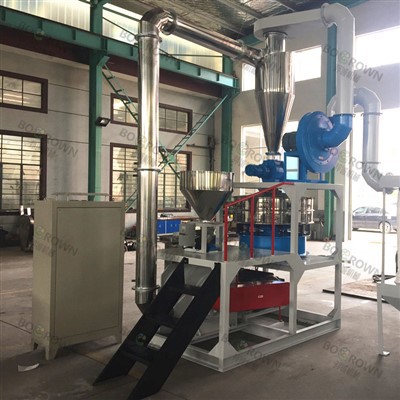
Let’s start by understanding why control methods are so crucial. A PVC Automatic Compounding and Feeding System is like the heart of a PVC production line. It ensures that the right amount of raw materials are mixed in the correct proportions, at the right time, and with the right consistency. Without proper control, we’d end up with inconsistent product quality, wasted materials, and a whole lot of headaches.
1. Manual Control
Okay, so let’s talk about the most basic control method – manual control. You might be thinking, "Manual? Isn’t this supposed to be an automatic system?" Well, manual control still has its place. Sometimes, during the initial setup or when making small adjustments, operators need to have hands – on control.
With manual control, an operator uses switches and knobs to start, stop, and adjust the speed of different components in the system. For example, they can manually set the feeding rate of resins, additives, or fillers. This is useful when you’re testing a new formulation or when you need to quickly respond to an unexpected issue.
However, manual control has its limitations. It’s highly dependent on the operator’s skill and attention. One small mistake, like setting the wrong feeding rate, can lead to a batch of sub – standard PVC products. Also, it’s not very efficient for large – scale production as it requires constant monitoring and adjustment.
2. Programmable Logic Controller (PLC) Control
Now, let’s move on to the big guns – the Programmable Logic Controller, or PLC for short. PLCs are the brains behind most modern PVC Automatic Compounding and Feeding Systems.
A PLC is a digital computer designed for industrial automation. It can be programmed to control various functions of the system, such as the timing of material feeding, the speed of the mixing blades, and the overall production cycle. You can think of it as a super – intelligent manager that follows a set of instructions you’ve given it.
One of the main advantages of PLC control is its precision. Once you’ve programmed the PLC, it will execute the tasks with high accuracy every single time. It can control multiple processes simultaneously, ensuring that all the components of the system work in harmony. For example, it can ensure that the resin feeder starts at the exact moment the mixer is ready to receive it, and stops precisely when the right amount has been added.
Another great thing about PLCs is their flexibility. You can easily change the programming if you want to switch to a different PVC formulation or production process. This is especially useful in industries where product requirements change frequently.
3. Sensor – Based Control
Sensors play a vital role in the control of PVC Automatic Compounding and Feeding Systems. We use different types of sensors to monitor various parameters in the system, such as temperature, humidity, pressure, and material level.
For example, temperature sensors are used to monitor the temperature inside the mixer. If the temperature gets too high, it can affect the quality of the PVC compound. The sensor will detect this and send a signal to the control system. The control system can then take appropriate action, like adjusting the cooling mechanism or reducing the speed of the mixing blades.
Level sensors are also very important. They are used to monitor the amount of raw materials in the storage hoppers. When the material level in a hopper gets too low, the sensor will trigger an alarm, and the control system can start the process of refilling the hopper. This ensures that the production doesn’t stop due to a lack of raw materials.
Pressure sensors are used to monitor the pressure in the feeding pipes. If there is a blockage in the pipe, the pressure will increase. The pressure sensor will detect this change in pressure and send a signal to the control system, which can then take steps to clear the blockage.
4. Remote Monitoring and Control
In today’s digital age, remote monitoring and control have become a must – have feature for PVC Automatic Compounding and Feeding Systems. With remote monitoring, you can keep an eye on the system’s performance from anywhere in the world, as long as you have an internet connection.
You can use a computer or a mobile device to access the system’s control panel remotely. This allows you to check the status of the system, view real – time data from the sensors, and even make adjustments to the control parameters. For example, if you’re on a business trip and you notice that the temperature in the mixer is rising, you can adjust the cooling settings right from your smartphone.
Remote control also enables predictive maintenance. The system can collect data over time and analyze it to predict when a component might fail. This allows you to perform maintenance before a breakdown occurs, reducing downtime and maintenance costs.
5. Recipe Management System
A recipe management system is another important control method for PVC Automatic Compounding and Feeding Systems. It allows you to store different formulations or "recipes" for making PVC compounds.
Each recipe contains information about the types and quantities of raw materials, the mixing time, the temperature settings, and other process parameters. When you want to produce a particular PVC compound, you simply select the corresponding recipe from the system.
The recipe management system then communicates with the PLC and other control components to ensure that all the steps in the recipe are followed accurately. This not only makes the production process more efficient but also ensures consistent product quality.
Why Choose Our PVC Automatic Compounding and Feeding Systems?
We’ve spent years perfecting these control methods in our PVC Automatic Compounding and Feeding Systems. Our systems are designed to be reliable, efficient, and easy to use. Whether you’re a small – scale manufacturer or a large – scale industrial plant, our systems can be customized to meet your specific needs.
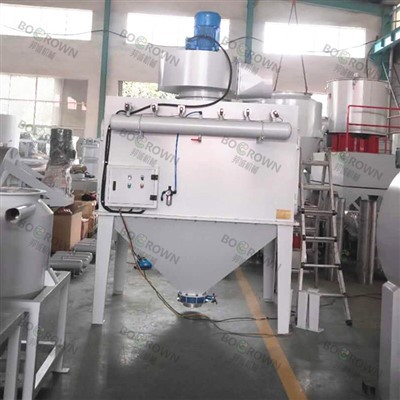
We offer comprehensive technical support and training to ensure that you can get the most out of our systems. Our team of experts is always ready to help you with any questions or issues you might have.
Vertical Plastic Crusher If you’re in the market for a high – quality PVC Automatic Compounding and Feeding System, I invite you to reach out and start a conversation. We can discuss your requirements in detail and see how our systems can fit into your production process. Don’t miss out on the opportunity to improve your PVC production efficiency and product quality.
References
- "Industrial Automation and Control" by John Doe
- "Sensors in Manufacturing Processes" by Jane Smith
- "PLC Programming for Beginners" by Tom Brown
ZJG BC Machinery Co., Ltd.
As one of the most professional pvc automatic compounding and feeding system manufacturers and suppliers in China, we’re featured by quality products and good price. Please rest assured to buy cost-efficient pvc automatic compounding and feeding system for sale here from our factory. Contact us for custom service and OEM service.
Address: No.8 Lexi Road, Leyu Town, Zhangjiagang City
E-mail: sales@bcextruder.com
WebSite: https://www.bcextruder.com/
